Skip to youth and family resources

MBM NEXT GENERATION · GIRLS & BOYS

Build the foundation before the world demands it.

Adult-guided lessons for girls and boys ages 8 to 18 to strengthen their minds, care for their bodies, understand money, and grow into responsibility without shame.

THE THREE PILLARS

Strong in more than one area.

The goal is not perfection. It is helping a young person understand what they can practice, what support they need, and how daily choices connect to the life they want.

PILLAR 01

Mind

Learn to notice, name, choose, and reset.

  • Separate facts from guesses and strong feelings.
  • Use honest self-talk without insulting yourself.
  • Choose one next action when a problem feels too large.
  • Practice focus by finishing a small task before switching.
  • Ask a safe adult for help before a problem becomes a crisis.

TRY IT TOGETHER

Name one challenge, write the facts, choose one action, and decide who can help.
PILLAR 02

Body

Treat your body like part of the mission.

  • Build consistent routines for sleep, hygiene, food, water, and movement.
  • Notice body signals such as tension, exhaustion, hunger, pain, or overload.
  • Respect personal space, consent, privacy, and other people’s boundaries.
  • Use movement and quiet time to support attention and recovery.
  • Tell a trusted adult about pain, unsafe contact, or a health concern.

TRY IT TOGETHER

Choose one routine that would make tomorrow easier and prepare it tonight.

PILLAR 03

Money

Give every dollar a direction.

  • Know the difference between a need, a want, and a goal.
  • Practice earning, saving, spending, giving, and planning with an adult.
  • Pause before buying and compare the choice with the larger goal.
  • Track where money goes instead of guessing.
  • Protect passwords, account details, and personal information.

TRY IT TOGETHER

Divide a pretend or real amount into save, spend, give, and goal categories.

AGE-APPROPRIATE PATHS

Increase responsibility as readiness grows.

Age is only a starting point. Adults should adjust language, expectations, supervision, and support for the individual child’s development and circumstances.

01

Ages 8–12

Build the language and routine.

  • Use short checklists and one instruction at a time.
  • Name feelings and body signals without judging them.
  • Practice simple chores and finishing before screen time.
  • Use save, spend, give, and goal envelopes or jars.
  • Identify at least three safe adults who can help.

02

Ages 13–15

Practice choices with support.

  • Plan schoolwork, rest, responsibilities, and device time.
  • Use a private reset plan for stressful moments.
  • Track spending and compare purchases with a savings goal.
  • Take growing responsibility for chores, preparation, and repair.
  • Discuss friendships, online pressure, boundaries, and asking for help.

03

Ages 16–18

Prepare for real independence.

  • Manage a weekly schedule and communicate conflicts early.
  • Build job-readiness habits: punctuality, follow-through, and respectful communication.
  • Create a basic budget for income, saving, transportation, food, and goals.
  • Learn how banking, taxes, credit, scams, and contracts work with a trusted adult.
  • Practice making health and safety decisions and contacting qualified help.

A SIMPLE FAMILY SYSTEM

Ten useful minutes every week.

A short, predictable family check-in can make expectations visible and give children a place to speak before small problems become larger ones.

01

Notice

Each person names one win and one difficult moment from the week.

02

Choose

Select one Mind, one Body, and one Money priority for the next seven days.

03

Prepare

Decide what reminder, supply, schedule change, or adult support is needed.

04

Own

Give every person one responsibility that is clear and realistic.

05

Review

Return next week, use facts, and adjust without humiliation or a long lecture.

Standards for girls and boys

  • Feelings are human; unsafe or cruel actions still require a limit.
  • Confidence can be built through preparation and completed actions.
  • Strength includes honesty, self-control, boundaries, kindness, and asking for help.
  • A young person’s worth is not measured by appearance, popularity, grades, athletic ability, or money.
  • Girls and boys both need practical skills, emotional language, financial knowledge, and accountability.
  • Correction should teach the next action, not attack identity.

What adults model

  • Keep promises small enough to keep, then follow through.
  • Explain household money choices without placing adult financial stress on the child.
  • Apologize and repair when you respond poorly.
  • Respect privacy and personal boundaries while providing appropriate supervision.
  • Praise specific effort, preparation, honesty, recovery, and responsibility.
  • Use the same core respect standard for daughters and sons.

START NOW

A seven-day family foundation.

Use a notebook or notes app. Keep the goal visible, the action small, and the review honest. No purchase or account is required.

Adults lead the process. Children should not be asked to post answers publicly or send private information to this website.

Day 1

Choose

Pick one family goal small enough to practice for seven days.

Day 2

Prepare

Remove one obstacle and place a reminder where the decision happens.

Day 3

Mind

Write the facts, the feeling, and one useful next action.

Day 4

Body

Prepare one routine tonight that supports tomorrow.

Day 5

Money

Track one day of spending or complete a needs-versus-wants exercise.

Day 6

Talk

Hold a ten-minute family check-in without phones or interruptions.

Day 7

Review

Name what worked, what did not, and what the family will repeat.

KEEP GOING

Repeat what worked.

Do not add five new goals. Repeat one useful practice until the family can do it with less reminding.

Adult discipline tools

CONVERSATIONS THAT BUILD SKILL

Ask, listen, then choose one action.

These prompts are for private family conversation. A child can answer out loud, write privately, or ask to return to the question later.

Mind

01

What is taking up the most space in your mind right now?

Mind

02

What part is a fact, and what part is a guess or fear?

Body

03

What signal tells you that your body needs rest, movement, food, water, space, or help?

Body

04

Which routine would make mornings or evenings easier?

Money

05

If you had $20, how would you divide it between now and later?

Money

06

What is something you want, and what goal could help you earn or save for it?

Responsibility

07

What do you want adults to trust you with next?

Repair

08

When you make a mistake, what would making it right look like?

Support

09

How can an adult help without taking the whole problem over?

Boundaries

10

What does respectful disagreement look and sound like?

Future

11

What skill would make your life easier one year from now?

Family

12

What is one thing our family should keep, stop, or start doing?

FAMILY PRODUCTS

Family workbooks and conversation tools.

Explore sample pages from the conversation cards and Money Ready workbook. Check each product's availability before buying; items awaiting checkout are marked coming soon.

Only finished products receive a product page.

Higher-risk anger, anxiety, and autism guides remain off sale pending professional review.

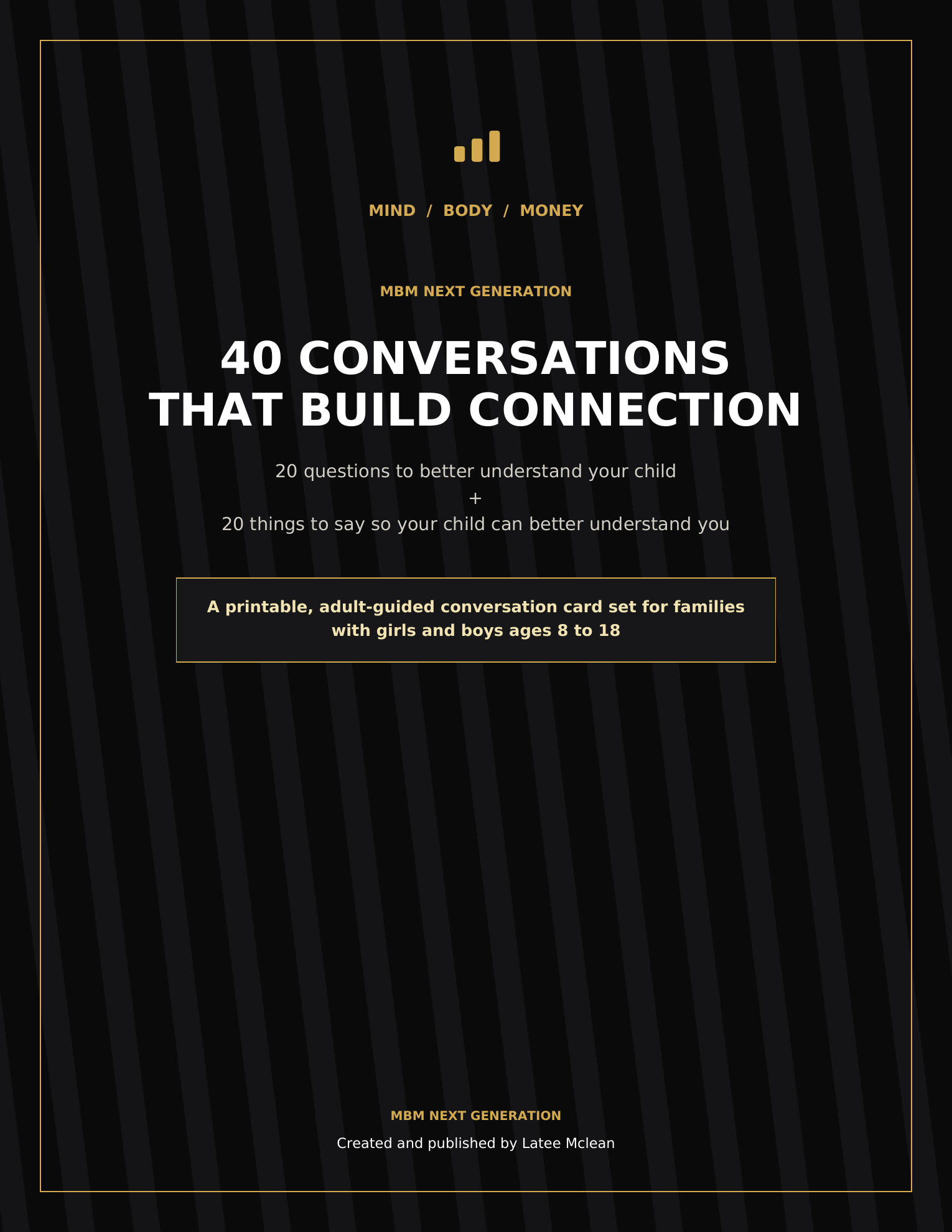
40 Conversations That Build Connection printable card set cover

17-PAGE PRINTABLE PDF · $15 USD

40 Conversations That Build Connection

Twenty questions to better understand your child, plus twenty honest parent messages that help your child understand your love, limits, worries, expectations, and willingness to repair.

  • 20 question cards
  • 20 parent-message cards
  • Family check-in worksheet
  • Personal and family-use license
View product details
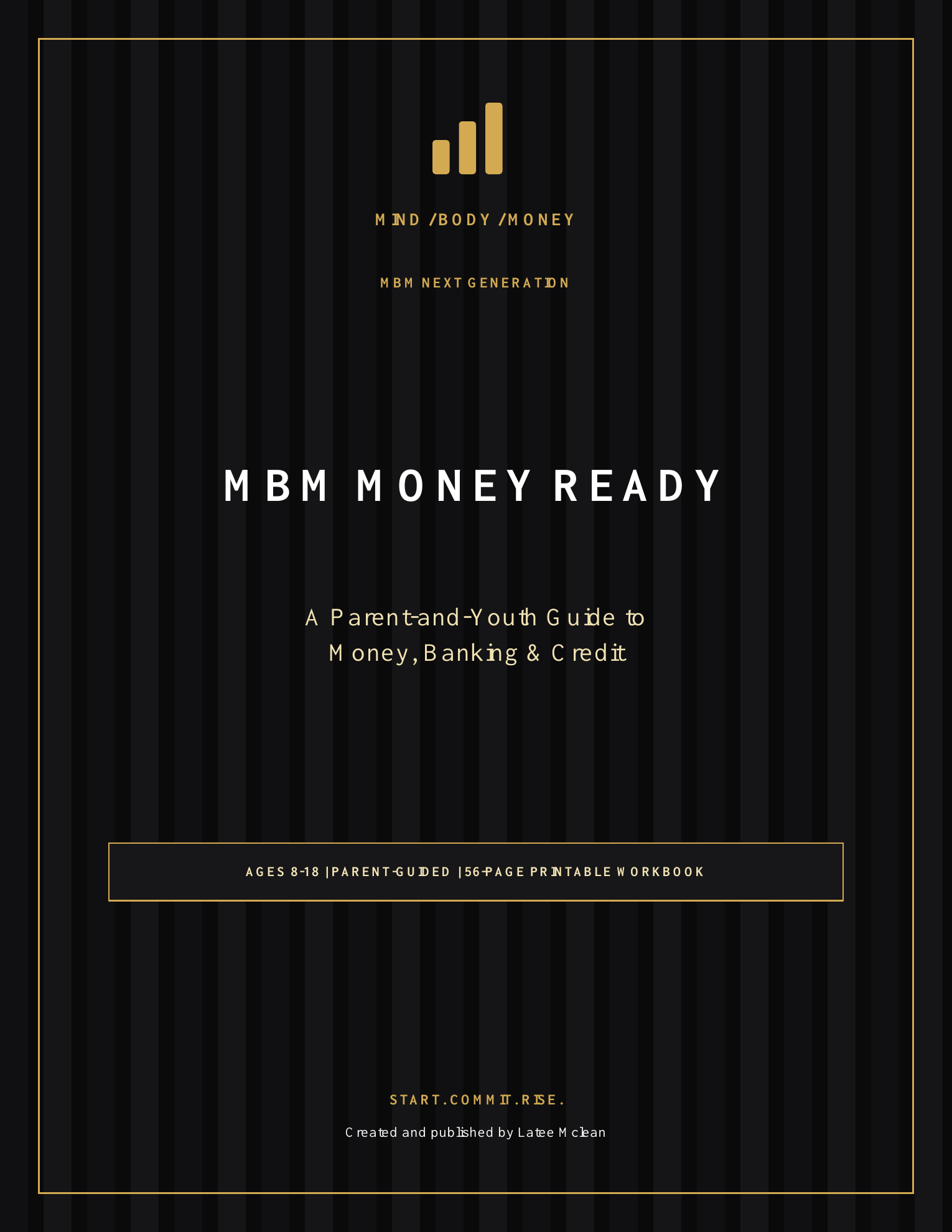
MBM Money Ready parent-and-youth finance workbook cover

56-PAGE PRINTABLE PDF · PLANNED PRICE: $24 USD

MBM Money Ready

A parent-and-youth guide that teaches earning, saving, budgeting, banking, paychecks, credit, borrowing, scams, and identity protection through age-based lessons and printable activities.

  • Four learning paths for ages 8-18
  • Budget, banking, and paycheck worksheets
  • Credit, loan, car, and housing lessons
  • 30-day family money challenge
View product details

Coming soon · Preview available now

Try the free money & credit quiz together →

MONEY SKILLS + FAMILY CONNECTION

MBM Family Starter Bundle

Both complete resources in one 75-page printable PDF, with a guide to using them together.

See bundle details and sample pages →

Coming soon. Preview available now.

IN DEVELOPMENT01

Mind, Body & Money Youth Workbook

A guided workbook for girls and boys to build the three pillars with an adult.

IN DEVELOPMENT02

Family Goal & Habit Planner

Weekly goals, routines, chores, savings, family check-ins, and progress reviews.

IN DEVELOPMENT03

30-Day Family Discipline Challenge

One age-appropriate action each day for a child and adult to complete together.

AVAILABLE NOW

Tools for the adults leading the home.

Use the current MBM reset, planner, cards, challenge, or complete system to strengthen your own follow-through.

Shop available tools

Adult-guided educational use

This page offers general educational activities for parents, guardians, caregivers, and the young people they supervise. It is not medical, psychological, psychiatric, nutritional, fitness, legal, tax, investment, or individualized financial advice. It does not diagnose, treat, prevent, or promise a particular result.

Adults remain responsible for choosing age-appropriate activities, providing supervision, respecting an existing professional plan, and contacting qualified professionals when individualized help is needed.

If a child may hurt themselves or someone else, use immediate emergency or crisis support. In the United States, call or text 988; call 911 for immediate danger.

Protect a young person’s privacy

  • Do not email MBM a child’s name, diagnosis, school record, medication list, behavior log, safety plan, photograph, location, or emergency contacts.
  • Keep written answers private unless the child and responsible adult choose an appropriate person to involve.
  • Use approved school, healthcare, developmental, or emergency channels for sensitive information.
  • Children should not make purchases or contact customer support without a responsible adult.
  • This website does not provide child accounts, assessments, public posting, or individualized treatment plans.
Read the privacy policy

Need support for anger, anxiety, communication differences, sensory needs, or difficult transitions?

The separate parent resource area provides general safety-first information, professional-help boundaries, and links to public health sources.

View anger, anxiety & communication support

Original MBM Next Generation educational material created and published by Latee Mclean. Copyright 2026. All rights reserved.